





















GCC Tourism 2026: Unified Visa and Digital Ecosystems Set to Redefine Regional Travel
The GCC is advancing toward a digitally integrated tourism ecosystem, highlighted by the planned Unified Tourist Visa and connected smart travel platforms. Expected to roll out in phases beginning in 2026, the initiative aims to simplify multi-country travel across six Gulf nations. By combining policy reform with digital infrastructure, the region is positioning itself as a seamless, technology-enabled destination for global visitors.

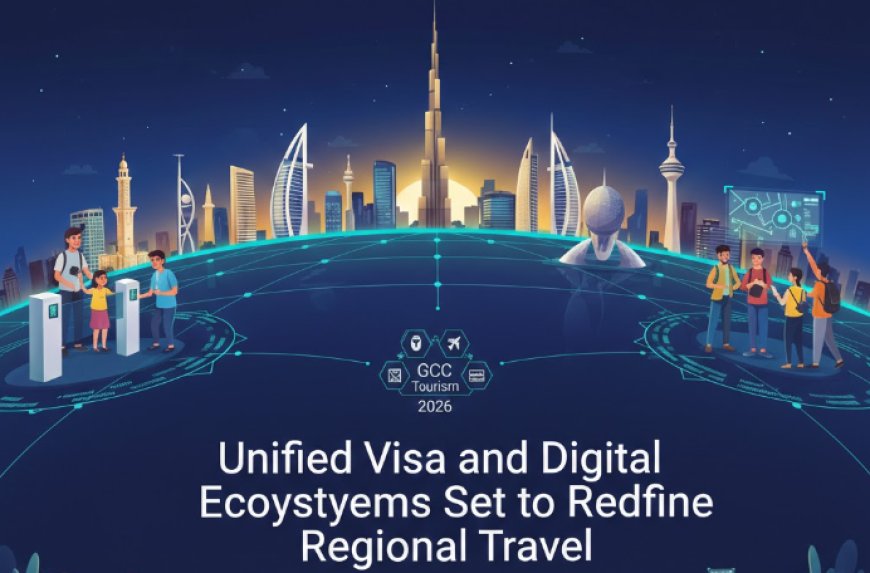
Gulf Nations Move Toward a Seamless, Technology-Enabled Visitor Journey
The Gulf Cooperation Council (GCC) is preparing for a new era in regional tourism—one built on digital integration, cross-border coordination, and simplified travel access. With the anticipated introduction of a unified tourist visa and the expansion of smart travel infrastructure, the six member states are positioning themselves as a connected destination rather than isolated markets.
Saudi Arabia, the United Arab Emirates, Qatar, Bahrain, Kuwait, and Oman are collectively investing in systems designed to modernize every phase of the visitor journey—from pre-arrival planning to post-trip engagement.
Unified GCC Visa: A Single Permit for Six Destinations
One of the most significant policy developments is the planned launch of a multi-country tourist visa. The initiative will allow international visitors to enter multiple GCC countries under a single authorization.
Although exact implementation dates remain under review, authorities indicate that phased testing could begin in 2026, followed by broader availability once border systems and data-sharing mechanisms are fully synchronized.
Preliminary expectations suggest:
-
Online application and digital approval
-
Eligibility for leisure and business travellers
-
Competitive fee structure aligned with global multi-country visas
-
Short- to medium-term stay validity options
-
Potential for multi-entry access
By reducing administrative hurdles, the visa aims to encourage multi-destination itineraries and longer regional stays.
From Fragmented Systems to Connected Platforms
Beyond visa reform, the GCC is accelerating efforts to digitize tourism infrastructure. Historically, visitors have navigated separate systems for immigration, transport, accommodation, and attractions. This fragmentation has limited data visibility and reduced operational efficiency.
The emerging strategy focuses on interoperability—linking government services, hospitality platforms, and transport systems into a cohesive digital framework.
Future-ready platforms are expected to offer:
-
Centralized travel information
-
Integrated booking management
-
Secure digital identity verification
-
Real-time itinerary updates
-
AI-supported travel assistance
-
Cross-border payment compatibility
Such integration allows tourism authorities to better understand visitor behavior while enhancing convenience for travelers.
Economic Diversification Through Smart Tourism
Tourism plays a growing role in Gulf economic transformation strategies. National agendas across the region prioritize knowledge-based industries, innovation, and sustainable development.
A unified visa combined with digital infrastructure strengthens the region’s competitiveness by:
-
Increasing regional travel circulation
-
Encouraging multi-city tourism packages
-
Supporting SMEs in hospitality and retail
-
Creating demand for digital and data-driven roles
-
Enhancing operational transparency
Rather than focusing solely on arrival numbers, the emphasis is shifting toward higher-value tourism supported by technology-enabled service ecosystems.
Building the Foundations: Governance, Security, and Skills
A fully connected tourism ecosystem requires robust governance frameworks. Digital integration must be supported by cybersecurity standards, biometric compatibility, and shared regulatory protocols.
Authorities are also investing in workforce development to ensure tourism professionals can operate and manage smart systems effectively. Upskilling in areas such as digital analytics, cybersecurity awareness, and experience design will be critical to long-term success.
Public-private partnerships are expected to play a central role in scaling infrastructure while maintaining service consistency.
A Regional Model for Digital-First Travel
The convergence of policy reform and digital modernization signals a strategic shift in how the GCC presents itself to global travellers. By treating the region as a unified tourism environment, Gulf nations aim to simplify travel while maintaining high security and operational control.
If implementation progresses as planned, the GCC could emerge as one of the world’s most digitally integrated travel corridors—combining cultural depth, modern infrastructure, and seamless mobility.
The coming years will determine how effectively ambition translates into execution, but the direction is clear: the Gulf is building a tourism ecosystem designed for connectivity, intelligence, and long-term resilience.
What's Your Reaction?
 Like
0
Like
0
 Dislike
0
Dislike
0
 Love
0
Love
0
 Funny
0
Funny
0
 Angry
0
Angry
0
 Sad
0
Sad
0
 Wow
0
Wow
0