

















King Salman International Airport: Riyadh’s $30 Billion Mega Aviation Hub Taking Shape for 2030
King Salman International Airport in Riyadh is a $30 billion aviation mega project being developed under Saudi Arabia’s Vision 2030 strategy. Covering 57 square kilometres, the airport will feature six runways and nine terminals and is expected to handle up to 120 million passengers annually by 2030. Long-term plans aim to increase capacity to 185 million passengers and 3.5 million tonnes of cargo by 2050. The project will strengthen Riyadh’s position as a global aviation, logistics, and tourism hub while contributing to economic diversification.

A Landmark Aviation Project for Riyadh
Saudi Arabia is advancing the development of King Salman International Airport (KSIA) in Riyadh, a massive aviation infrastructure project designed to position the Saudi capital as a global transportation and logistics hub. The airport is being developed as part of the Kingdom’s Vision 2030 strategy, which focuses on economic diversification, tourism growth, and global connectivity.
The project is overseen by the King Salman International Airport Development Company (KSIADC), a subsidiary of Saudi Arabia’s Public Investment Fund (PIF). Construction began in September 2025, with the airport expected to start operations around 2030.
Strategic Location and Project Scale
King Salman International Airport will be located north of Riyadh, adjacent to the existing King Khalid International Airport. The development will cover an area of approximately 57 square kilometres, making it one of the largest airport developments in the world.
The large footprint allows for extensive aviation infrastructure, logistics zones, commercial developments, and supporting facilities that will transform the airport into a fully integrated aviation city.
The project has an estimated investment of around $30 billion, highlighting the scale of Saudi Arabia’s commitment to expanding its aviation sector.
Passenger and Cargo Capacity Expansion
Once operational, King Salman International Airport is expected to dramatically increase Riyadh’s air transport capacity.
The airport is projected to serve up to 120 million passengers annually by 2030, while long-term expansion plans could increase capacity to 185 million passengers and approximately 3.5 million tonnes of cargo annually by 2050.
This expansion will help Saudi Arabia strengthen its international aviation network while supporting growing tourism and trade demand across the region.
Economic Impact and Job Opportunities
The development of KSIA is expected to deliver significant economic benefits for Saudi Arabia. The airport project could contribute approximately SR27 billion annually to the Kingdom’s non-oil GDP, supporting economic diversification efforts.
Additionally, the project is expected to generate more than 100,000 direct and indirect employment opportunities across sectors such as aviation, logistics, hospitality, and tourism.
By enhancing international connectivity and logistics capacity, the airport will help Riyadh strengthen its position as a regional business and travel hub.
Airport Design and Infrastructure
The masterplan for King Salman International Airport has been developed by the international architecture firm Foster + Partners, focusing on creating a modern airport environment that reflects Riyadh’s cultural identity while delivering advanced passenger experiences.
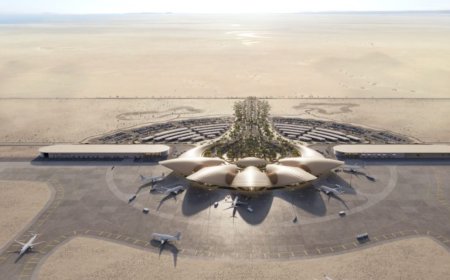
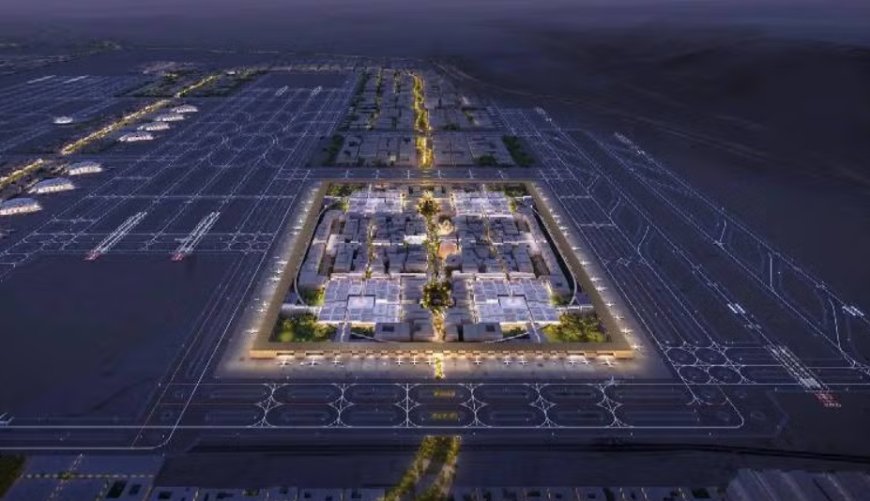
The airport will feature six parallel runways and nine terminals, allowing it to accommodate high passenger volumes and complex aviation operations. The terminal system will include facilities for commercial airlines, private aviation, cargo operations, and a royal terminal.
Existing infrastructure at King Khalid International Airport will also be integrated into the new development, enhancing operational capacity and connectivity.
Aerotropolis Concept and Supporting Developments
KSIA is being developed as a large aerotropolis, where aviation infrastructure is combined with logistics hubs, business districts, and supporting real estate developments.
Approximately 45 square kilometres of the site will be dedicated to airport operations, while additional space will be used for logistics centres, residential areas, recreational zones, and commercial developments.
A landscaped corridor known as the Wadi Loop will connect various parts of the airport development, integrating transport infrastructure with green spaces and urban facilities.
Sustainability and Environmental Strategy
Sustainability is a key focus of the King Salman International Airport project. The airport aims to achieve LEED Platinum certification, reflecting the use of energy-efficient systems, renewable energy sources, and environmentally responsible infrastructure.
The project includes green infrastructure solutions, modern airspace management systems, and sustainable construction practices designed to reduce environmental impact.
These initiatives align with Saudi Arabia’s long-term sustainability goals and efforts to create environmentally responsible infrastructure.
Global Contractors and Engineering Partners
The development of King Salman International Airport involves collaboration with several international engineering and construction companies.
Foster + Partners leads the architectural design, while Jacobs provides engineering services including masterplan validation and runway design.
Global construction firm Bechtel has been appointed to develop three major passenger terminals, including the commercial airline terminal and private aviation facilities.
Infrastructure firm Parsons is responsible for delivering critical airside infrastructure such as runways, taxiways, air traffic control systems, and transport networks.
Project management and construction monitoring services are being provided by Mace, ensuring the project meets cost, sustainability, and safety targets.
Logistics Partnerships and Smart Airport Technology
The airport developer has established several partnerships to strengthen logistics operations and digital infrastructure.
Plans include the creation of an e-commerce and logistics special economic zone within the airport area, supporting global trade and supply chain operations.
Collaborations with logistics companies and technology partners will also support the development of smart airport systems, advanced cargo management technologies, and digital passenger services.
These initiatives will help transform KSIA into a highly efficient and technologically advanced aviation hub.
Strengthening Saudi Arabia’s Aviation Leadership
King Salman International Airport is expected to become a cornerstone of Saudi Arabia’s future aviation strategy.
By expanding passenger capacity, improving logistics infrastructure, and supporting tourism growth, the airport will play a crucial role in strengthening the Kingdom’s position within the global aviation industry.
As construction progresses toward the planned 2030 launch, KSIA is set to redefine air travel in Riyadh and contribute significantly to Saudi Arabia’s long-term economic transformation.
What's Your Reaction?
 Like
0
Like
0
 Dislike
0
Dislike
0
 Love
0
Love
0
 Funny
0
Funny
0
 Angry
0
Angry
0
 Sad
0
Sad
0
 Wow
0
Wow
0